
Horcrux is a multi-party-computation (MPC) signing service for CometBFT (Formerly known as Tendermint) nodes
This is a security-hardened fork of strangelove-ventures/horcrux (based on
v3.3.2; upstream is archived). All changes are opt-in and backward-compatible — with no new configuration, behavior is identical to upstreamv3.3.2.
- Security hardening from two independent audits — closes a nonce-handling flaw that risked key-material exposure, a residual double-sign path, an unauthenticated cluster admin surface, and several crash-inducing input paths.
- Dependency & Go toolchain updates —
govulncheckreachable vulnerabilities 13 → 0; builds on Go 1.27.- Optional connection security — persistent priv-validator connection authentication, and opt-in mutual TLS between cosigners.
- Broader node compatibility — opt-in leader-only priv-validator connections and a spec-compliant sign response, for stricter priv-validator implementations (e.g. gno.land / tm2).
- Supply chain — vendored the threshold-ed25519 crypto in-tree (its upstream GitLab source is archived).
See
docs/FORK.mdfor the full change list anddocs/authentication.mdfor connection-security setup.Container image:
ghcr.io/aeddi/horcrux:main.
Take your validator infrastructure to the next level of security and availability
- Composed of a cluster of signer nodes in place of the remote signer, enabling High Availability (HA) for block signing through fault tolerance.
- Secure your validator private key by splitting it across multiple private signer nodes using threshold Ed25519 signatures
- Add security and availability without sacrificing block sign performance.
Validator operators balance operational and risk tradeoffs to avoid penalties via slashing for liveliness faults or double signing blocks.
Traditional high-availability systems where the keys exist on hot spares risk double signing if there are failover detection bugs. Low-availability systems, or manual failover, risk downtime if manual intervention cannot respond in a timely manner.
Multi-party computation using threshold signatures is able to provide high-availability while maintaining high security and avoiding double signing via consensus and failover detection mechanisms.
For more on how the Horcrux MPC signing flow works, see docs/signing.md

Horcrux v2.x introduces Raft For leader election and high watermark consensus.

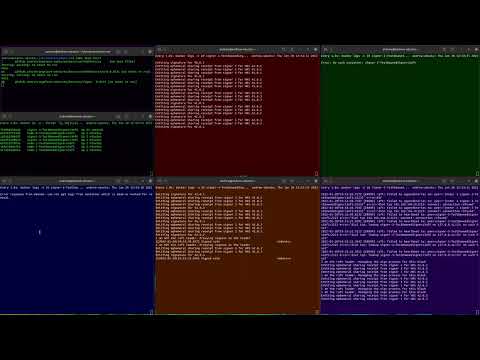
Horcrux signer cluster configured with 5 total nodes, threshold 3.
See documentation in docs/migrating.md to learn how to upgrade your validator infrastructure with Horcrux.
See docs/authentication.md to optionally authenticate the connections between Horcrux and your chain nodes.
Security and management of any key material is outside the scope of this service. Always consider your own security and risk profile when dealing with sensitive keys, services, or infrastructure.
As far as the law allows, this software comes as is, without any warranty or condition, and no contributor will be liable to anyone for any damages related to this software or this license, under any kind of legal claim.
- CometBFT Validator Documentation
- Cosmos Hub Validator Documentation
- Provably Secure Distributed Schnorr Signatures and a (t, n) Threshold Scheme for Implicit Certificates
The initial threshold signing code in this project was developed by Roman Shtylman (@defunctzombie). The work here improves the cluster reliability and performance, adds a nice CLI experience and additional documentation to make operating this software easier and more reliable.